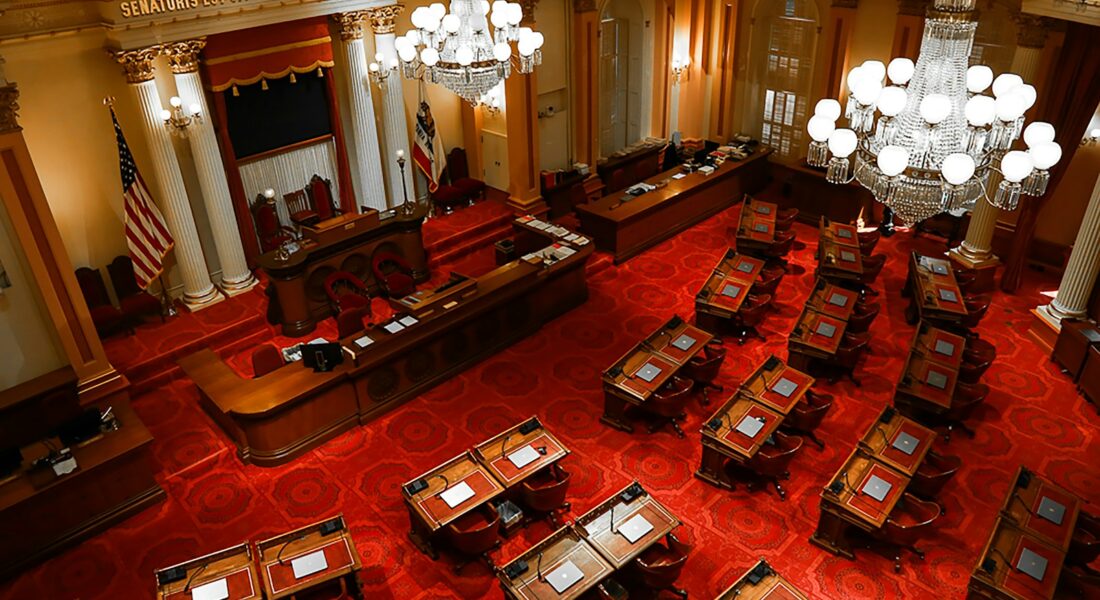
Defense Secretary Pete Hegseth told the Senate Armed Services Committee on April 30 that the administration's current ceasefire with Iran has frozen the 60-day clock under the War Powers Resolution of 1973, a legal position that Democratic members immediately rejected as unsupported by the statute. Hegseth argued that President Donald Trump's extension of the ceasefire has stopped the clock on the 1973 War Powers Resolution's 60-day rule. The clock started on March 2 when Trump notified Congress pursuant to the law of the use of the armed forces against Iran. Trump ordered the initial strikes to begin on Feb. 28, an operation that U.S. forces carried out jointly with Israel.
> **Statutory Framework**
> – **48-hour notice:** The President must notify Congress within 48 hours of introducing forces into hostilities. Trump complied on March 2. [1][3]
> – **60-day limit:** Under 50 U.S.C. § 1544(b), the President must terminate unauthorized hostilities within 60 days of that notification, placing the deadline on May 1. [5][8]
> – **30-day extension:** The statute permits a one-time 30-day extension to allow for safe troop withdrawal. It does not authorize continued offensive operations. [5][2]
> – **Ceasefire clause:** The War Powers Resolution contains no textual provision suspending the 60-day clock during a ceasefire. [5]
The War Powers Resolution of 1973 lays out a timeline for when lawmakers must be notified of hostilities and when a president is required to withdraw American forces; under the law, the president must give formal notification within 48 hours of introducing forces into hostilities, which officially begins the 60-day clock. Legal experts note that the Office of Legal Counsel could attempt to argue that the ceasefire stopped the 60-day clock and that any further hostilities would reset it entirely, but one attorney with the Brennan Center's Liberty and National Security Program said "that is not something that by its text or by its design the War Powers Resolution accommodates." The position nonetheless drew at least tacit acceptance from some Republicans. Some Republicans who had previously flirted with supporting a war powers resolution appeared open to Hegseth's interpretation, with Sen. Todd Young (R-Ind.) telling reporters, "It sounds like there's some wiggle room he provided there for himself."
Senate Democrats countered that an active naval blockade of the Strait of Hormuz constitutes ongoing hostilities regardless of any ceasefire label. Sen. Elizabeth Warren argued that the U.S. Navy's blockade of the Strait of Hormuz means "the United States is at war with Iran" within the meaning of the statute. Sen. Tim Kaine (D-Va.) put the point directly: "A ceasefire means bombs aren't dropping. It doesn't mean there are no hostilities. If we're using the U.S. military to blockade everything going into and out of Iran, that's still hostility." Kaine told Hegseth, "I do not believe the statute would support that." The dispute has a historical parallel. The debate echoes a clash between Congress and the White House during the Libya conflict in 2011, when then-President Obama argued that U.S. involvement, providing intelligence and refueling allied aircraft, did not rise to the level of "hostilities" under the War Powers Act. In that instance, the Obama administration argued it did not need congressional approval for air strikes against Libya past the 60-day mark because the operations did not involve American ground troops.
The Senate voted 50 to 47 to reject the sixth Democratic-sponsored war powers resolution, one day before the statutory deadline. The measure failed 47 to 50, with Sens. Susan Collins of Maine and Rand Paul of Kentucky the only Republicans breaking with their party; it was the first time Collins had voted for such a measure since the war began in late February. Collins stated after the vote, "The Constitution gives Congress an essential role in decisions of war and peace, and the War Powers Act establishes a clear 60-day deadline for Congress to either authorize or end U.S. involvement in foreign hostilities." Sen. John Fetterman of Pennsylvania was the lone Democrat to vote against the resolution. Even if both chambers were to eventually approve a war powers resolution on Iran, the outcome would be largely symbolic, since the president could veto it.
The administration's legal position leaves several procedural options unresolved. The 1973 law also gives presidents the power to ask for a 30-day extension, though it was unclear whether Trump planned to invoke that provision. Hegseth declined to answer Kaine's question regarding whether the president would notify Congress of the need for a 30-day extension. Ahead of the deadline, Trump administration officials were in active conversations with members of Congress about congressional authorization for the war. The War Powers Resolution has never been used to end a military action, and courts have shied away from weighing in on the statute's constitutionality, despite multiple lawsuits brought by members of Congress over the years. Senate Majority Leader John Thune has not committed to scheduling an authorization vote. Thune deferred that decision to his Republican colleagues, saying, "At this point, I don't see that." The administration's war expenditures add a separate pressure point. Acting Pentagon Comptroller Jules Hurst III testified that the war has cost $25 billion so far, and the Trump administration planned to make a supplemental funding request to Congress.
—
—
**References:**
[1] Foreign Policy. (2026, April 30). *Hegseth: U.S.-Iran Cease-Fire Stops 60-Day War Powers Clock*. https://foreignpolicy.com/2026/04/30/hegseth-senate-testimony-iran-war-60-days-war-powers-resolution/ [2] ABC News. (2026, April 30). *Hegseth says War Powers deadline doesn't apply because of ceasefire with Iran*. https://abcnews.com/Politics/hegseth-doubles-attacking-dissenters-iran-war-biggest-adversary/story?id=132518427 [3] The Hill. (2026, April 30). *Collins breaks with GOP leaders on Iran war powers resolution*. https://thehill.com/homenews/senate/5857975-collins-breaks-gop-iran-war-powers/ [4] Axios. (2026, May 1). *Hegseth claims Iran ceasefire means War Powers stop*. https://www.axios.com/2026/05/01/iran-pentagon-hegseth-war-powers-senate-hearing-republicans [5] CBS News. (2026, May 1). *As Iran war nears key 60-day deadline, Congress and Trump face choices on next steps*. https://www.cbsnews.com/news/iran-war-powers-resolution-60-day-deadline-congress-trump/ [6] Military Times. (2026, April 30). *Ceasefire 'stops' War Powers clock on Iran, Hegseth claims*. https://www.militarytimes.com/news/pentagon-congress/2026/04/30/ceasefire-stops-war-powers-clock-on-iran-hegseth-claims/ [7] Iran International. (2026, April 30). *Hegseth says no need for Congress approval as ceasefire pauses Iran war clock*. https://www.iranintl.com/en/202604302993 [8] CNN. (2026, April 25). *The law sets a 60-day limit on unauthorized wars. The US is blowing past it in Iran*. https://www.cnn.com/2026/04/25/politics/war-powers-act-trump-iran-war-congress-analysis [9] NBC News. (2026, April 30). *House Speaker Mike Johnson says the U.S. is 'not at war' with Iran as White House approaches 60-day deadline*. https://www.nbcnews.com/politics/congress/house-speaker-mike-johnson-says-us-not-war-iran-white-house-approaches-rcna342868 [10] Spectrum Local News / AP. (2026, April 30). *Hegseth says clock paused ahead of key date in Iran conflict as another Senate war powers vote fails*. https://spectrumlocalnews.com/us/snplus/news/2026/04/30/hegseth-says-clock-paused-ahead-of-key-date-in-iran-conflict-as-another-senate-war-powers-vote-fails [11] CBS News. (2026, March 4). *Senate rejects attempt to rein in Trump's power to wage war on Iran*. https://www.cbsnews.com/news/senate-vote-iran-war-powers-resolution-trump/ [12] Time. (2026, April 30). *Collins Joins Democrats in Voting For Measure to End Iran War*. https://time.com/article/2026/04/30/senate-rejects-measure-to-curb-iran-war-hours-before-key-legal-deadline/ [13] Time. (2026, April 15). *Senate Blocks Iran War Powers Resolution for Fourth Time*. https://time.com/article/2026/04/15/senate-blocks-iran-war-powers-resolution-for-fourth-time/ [14] Office of Sen. Adam Schiff. (2026, April 29). *At 60 Days of Iran War, Sen. Schiff, Leader Schumer to Force Vote on War Powers Resolution*. https://www.schiff.senate.gov/news/press-releases/news-at-60-days-of-iran-war-sen-schiff-leader-schumer-to-force-vote-on-war-powers-resolution-to-block-trumps-illegal-iran-war/ [15] Fox News. (2026, April 30). *Congress faces Iran war deadline as Republicans block war powers vote*. https://www.foxnews.com/politics/democrats-fail-shatter-republicans-resolve-eve-crucial-iran-deadline [18] CNN. (2026, April 25). *The law sets a 60-day limit on unauthorized wars. The US is blowing past it in Iran*. https://www.cnn.com/2026/04/25/politics/war-powers-act-trump-iran-war-congress-analysis [20] The Hill. (2026, April 23). *Senate Republicans defeat war powers resolution to halt military operations against Iran*. https://thehill.com/homenews/senate/5844023-iran-war-powers-resolution-senate/Sources:

Comments (0)