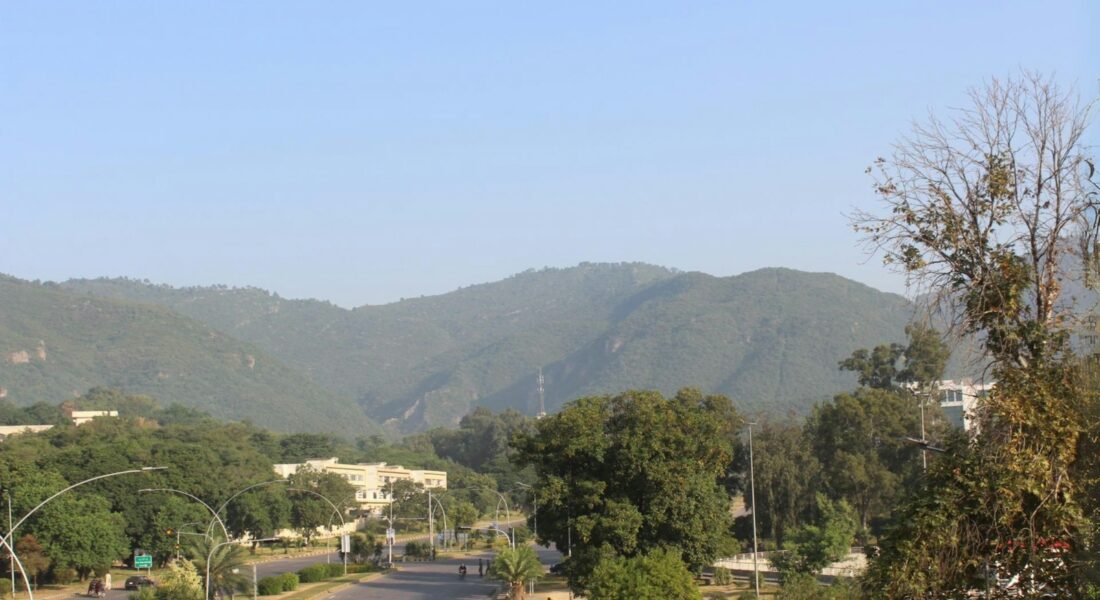
Special Envoy Steve Witkoff and White House adviser Jared Kushner are departing for Islamabad, Pakistan, on Saturday for a second round of negotiations with Iranian representatives, White House Press Secretary Karoline Leavitt confirmed Friday. Iran initiated the contact: the Iranians "reached out" and requested the in-person meeting, Leavitt said on Fox News. The talks will be mediated by Pakistani officials, who Leavitt described as intermediaries between the two delegations. The administration has not publicly invoked a specific statutory authority for the negotiations, which are proceeding under the President's Article II foreign affairs powers and the general diplomatic authority vested in the executive branch.
Vice President JD Vance, who led the prior U.S. delegation to Islamabad in the first round of negotiations, will not attend this weekend's talks. Axios reported that Vance is not attending because his Iranian counterpart, Speaker of Parliament Mohammad Bagher Qalibaf, will not be present for the talks. Vance, Secretary of State Marco Rubio, and the national security team will remain in Washington for updates. U.S. officials said Vance is on standby to travel to Pakistan if talks progress and is expected to participate in phone calls with the team on the ground as needed.
The current round is the second attempt at direct engagement after the first collapsed without agreement. The initial Islamabad talks, which lasted 21 hours, were the first face-to-face engagement between the U.S. and Iran since the Obama administration negotiated the 2015 nuclear agreement. Vance stated at a post-talks press conference that the central U.S. demand was an "affirmative commitment" from Iran that it would not seek a nuclear weapon or the enabling tools to achieve one. A planned second round under Vance's leadership was delayed and then postponed indefinitely after Iran refused to participate, according to U.S. officials. President Trump unilaterally extended the two-week ceasefire at the 11th hour to allow more time to reconvene the negotiators.
The procedural posture of the current talks carries significant ambiguity on the Iranian side. Iranian Foreign Minister Abbas Araghchi said Friday he was "embarking on a timely tour" of Islamabad, Muscat, and Moscow in order to "closely coordinate with our partners on bilateral matters and consult on regional developments." Iranian state media denied that any meeting with U.S. negotiators had been scheduled. Araghchi arrived in Islamabad on Friday night for talks with Pakistani Prime Minister Shehbaz Sharif, Foreign Minister Ishaq Dar, and Field Marshal Asim Munir, with a Pakistani official telling Axios those meetings would focus on relaunching negotiations with the Trump administration. Two sources said any meeting between the U.S. envoys and Araghchi could take place on Monday, after Kushner and Witkoff hold separate bilateral talks with the Pakistani mediators.
The central dispute structuring both sides' positions is control of the Strait of Hormuz. The United States imposed a naval blockade on Iran on April 13, 2026, following the breakdown of the first Islamabad talks, with the blockade applying to ships going to and from Iranian ports. Before the conflict began, approximately 25 percent of the world's seaborne oil trade and 20 percent of its liquefied natural gas passed through the strait. Iran's leadership conditioned further negotiations on an end to the U.S. naval blockade of Iranian ports. For Tehran, key demands for extending the ceasefire include lifting the U.S. naval blockade and guarantees against resumed fighting between Israel and Hezbollah. The administration has not indicated it will alter the blockade as a precondition to talks. U.S. military officials are simultaneously developing new plans to target Iran's capabilities in the Strait of Hormuz in the event the current ceasefire collapses. That parallel military planning reflects the administration's stated posture: diplomacy and coercive pressure are proceeding concurrently, not sequentially.
—
—
References:
[1] CBS News. (2026, April 24). Live Updates: Witkoff, Kushner to head to new Iran peace talks in Pakistan, White House says. https://www.cbsnews.com/live-updates/us-iran-war-trump-strait-of-hormuz-hezbollah-lebanon-israel-ceasefire/ [2] CNBC. (2026, April 24). Kushner, Witkoff heading to Pakistan for 'direct talks' with Iran, White House says. https://www.cnbc.com/2026/04/24/iran-war-pakistan-trump-hegseth.html [3] Axios. (2026, April 24). Witkoff and Kushner to meet Iranian foreign minister in Pakistan: White House. https://www.axios.com/2026/04/24/witkoff-kushner-iran-talks-pakistan [4] The Hill. (2026, April 24). White House sending Witkoff, Kushner to Pakistan on Saturday for Iran talks. https://thehill.com/homenews/administration/5847794-iran-talks-trump-administration-pakistan-kushner-witkoff/ [5] Dawn. (2026, April 24). White House says Steve Witkoff, Jared Kushner to head to Pakistan for talks with Iran. https://www.dawn.com/news/1994680/white-house-says-steve-witkoff-jared-kushner-to-head-to-pakistan-for-talks-with-iran [6] NPR. (2026, April 12). The U.S. military says it will blockade Iranian ports as Iran peace talks collapse. https://www.npr.org/2026/04/12/nx-s1-5782538/u-s-iran-peace-talks-islamabad-collapse [7] Axios. (2026, April 21). Vance's Pakistan trip postponed indefinitely as Iran boycotts peace talks. https://www.axios.com/2026/04/21/iran-us-war-peace-talks-vance-pakistan [8] Times of Israel. (2026, April 24). Trump said dispatching Witkoff, Kushner for talks with Iran FM in Pakistan in coming days. https://www.timesofisrael.com/trump-said-dispatching-witkoff-kushner-for-talks-with-iran-fm-in-pakistan-in-coming-days/ [9] Wikipedia. (2026, April 24). 2026 United States naval blockade of Iran. https://en.wikipedia.org/wiki/2026_United_States_naval_blockade_of_Iran [10] Fortune. (2026, April 19). Trump sends JD Vance to Pakistan again for more talks with Iran. https://fortune.com/2026/04/19/trump-jd-vance-pakistan-iran-ceasefire-talks-threats-infrastructure-hormuz/ [11] NPR. (2026, April 22). Iran says it seized ships in Strait of Hormuz as U.S. blockade continues amid ceasefire. https://www.npr.org/2026/04/22/nx-s1-5795405/iran-middle-east-updates [12] CNN. (2026, April 23). US military developing plans to target Iran's Strait of Hormuz defenses if ceasefire fails. https://www.cnn.com/2026/04/23/politics/us-military-plans-iran-targets-strait-of-hormuzSources:

Comments (0)